
Across Britain, well-intentioned parents are creating one of the most dangerous insurance traps in modern property ownership. In their rush to avoid inheritance tax through early property transfers to children, families are inadvertently voiding their home insurance policies and exposing themselves to financial devastation that could dwarf any tax savings.
The scale of this hidden crisis is staggering. Industry estimates suggest that over 180,000 UK properties change hands annually through family transfers, with the vast majority maintaining insurance policies in the original owner's name. This fundamental mismatch creates an insurance void worth an estimated £2.7 billion in unprotected property value.
The Insurable Interest Catastrophe
At the heart of this crisis lies a legal principle that most families have never heard of: insurable interest. UK insurance law demands that the person holding the policy must have a financial stake in the property's wellbeing. The moment ownership transfers to a child, the parent loses this insurable interest, rendering their policy legally worthless.
"We're seeing families devastated by claims rejections they never saw coming," explains a senior underwriter at a major UK insurer. "A house fire or flood occurs months after the transfer, and suddenly we're telling people their £400,000 property has no coverage because they're no longer the legal owner."
The timing of these revelations makes them particularly cruel. Families typically discover the void only when filing major claims, often during already stressful periods involving property damage or liability issues.
When Tax Planning Becomes Financial Ruin
The irony is profound: families attempting to protect their wealth through inheritance tax planning are creating exposure to losses that could exceed any tax liability they were trying to avoid. A typical inheritance tax saving of £140,000 becomes meaningless when facing an uninsured property claim of £300,000 or more.
Consider the Johnson family from Surrey, who transferred their £850,000 home to their daughter in 2022 to reduce their inheritance tax burden. When a kitchen fire caused £180,000 in damage six months later, their insurer rejected the claim entirely. The parents, still living in the property and paying the premiums, discovered they had no legal right to claim compensation for damage to a property they no longer owned.
The Multiple Exposure Points
The insurance void extends beyond basic property damage. When ownership transfers occur without proper insurance restructuring, families face exposure across multiple areas:
Public Liability Claims: If someone is injured on the property, unclear insurance ownership can leave both generations exposed to personal liability claims worth hundreds of thousands of pounds.
Mortgage Complications: Lenders require continuous insurance coverage. When policies become invalid due to ownership changes, families can face immediate mortgage acceleration or forced insurance placement at punitive rates.
Contents Coverage Gaps: Personal belongings often remain with the original owners despite property transfer, creating complex coverage disputes when losses occur.
The Hidden Triggers
Insurers are becoming increasingly sophisticated at identifying these coverage voids. Advanced data matching systems now cross-reference policy holders with Land Registry records, automatically flagging discrepancies that previously went unnoticed.
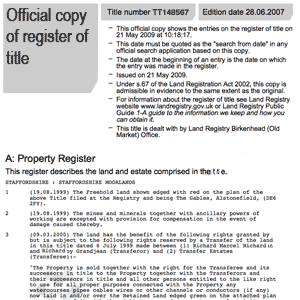 Photo: Land Registry, via www.landregistry-titledeeds.co.uk
Claims investigators routinely examine ownership records as part of their standard process, meaning even minor claims can trigger coverage reviews that expose fundamental policy invalidity.
Restructuring Coverage Correctly
Families can protect themselves through proper insurance restructuring, but the process requires careful coordination:
Immediate Transfer of Policies: Insurance policies must transfer to the new legal owner on the same day as the property transfer. Any gap, even hours, can void coverage.
Joint Policy Arrangements: Where parents continue living in transferred properties, joint policies naming both generations can maintain coverage while preserving the inheritance tax benefits.
Trust Structure Insurance: Properties transferred into family trusts require specialised trust insurance policies that standard household insurers rarely offer.
The Professional Guidance Imperative
The complexity of these arrangements demands professional coordination between solicitors, tax advisers, and insurance specialists. Yet research suggests that fewer than 30% of families receive comprehensive insurance guidance during property transfer planning.
"We're seeing families spend thousands on legal and tax advice for property transfers, then completely overlook the insurance implications that could cost them everything," notes a chartered insurance broker specialising in family wealth protection.
Protecting Your Family's Future
For families considering property transfers, several critical steps can prevent insurance catastrophe:
Pre-Transfer Insurance Review: Before any ownership changes, conduct a comprehensive review of existing policies with a specialist broker who understands family transfer implications.
Coordinated Transfer Timing: Ensure property ownership changes and insurance policy transfers occur simultaneously, with no coverage gaps.
Annual Policy Audits: Regularly review insurance arrangements to ensure they continue matching current ownership structures and family circumstances.
The inheritance tax benefits of family property transfers remain significant, but only when combined with proper insurance protection. Families who fail to address these coverage gaps may find their wealth protection strategy has become their greatest financial vulnerability.
In an era where property values represent the majority of many families' wealth, ensuring continuous insurance protection during ownership transitions isn't just prudent—it's essential for preserving the financial security that inheritance planning aims to protect.